Case Study · Feb to Jun 2026
Wellbeinn
Five months with the mandate to turn a wellbeing-products reseller into a tech-enabled wearable company. I shipped the MVP, built the science behind it, stood up the engineering team, and hired my own successor.
The Brief
Wellbeinn is a 20+ person business that sold wellbeing products through retail channels and decided to become the tech company behind its own wearable. When I walked in, they had a founder team with strong commercial conviction and a real operator's read on the market, and a company that had never had an engineering function: no app, no backend, no science, no one who had ever shipped software inside it. A launch date on the calendar, and no team to hit it.
Take this from zero to launch. Define the strategy. Validate the technology. Build the engine. Build the science. Build the team that comes after. Ship it.
Five months later the app is live on iOS and Android with its first users on it, the metrics rest on evidence that holds up to qualified review, and the company has an engineering team of its own: a first production engineer and the full-time CTO who takes over from me.
The Five Months
- Feb
Strategy
Product direction set with the founders: rest and recovery as the wedge, science behind every metric.
- Feb to Mar
Hardware Go / No-Go
Three manufacturers evaluated against my framework; two fail on technical grounds, one survives a full audit.
- Mar
Architecture
Multi-device data model, BLE abstraction, blank repository. The foundations get laid for the ecosystem the founders envision.
- Mar to May
Build and science
Platform, releases, and 17 metrics shipped in waves, each grounded in peer-reviewed evidence.
- May
Launch
Live on the App Store and Google Play, first users on.
- Jun
Handoff
Both hires signed: the first production engineer and the full-time CTO. I hand over.
What I Built
The work split into five workstreams; this is the order they ran in.
Strategy before code
I worked alongside the CEO and co-founders to shape product strategy, not just execute on it.
- Turned the founders' ecosystem vision into an architecture. The founders saw the band as the entry point to a multi-device ecosystem (band, ring, smart scale, recovery gear). My job was making that buildable: a data model and a BLE abstraction designed so every device after the first integrates with no re-architecture. One device exists today; the architecture is ready for the rest.
- Differentiation thesis. My strongest push: differentiate on what sleep and rest can do for the user, and anchor every metric in current science instead of shipping metrics for their own sake. It is now the company's stated positioning.
- AI roadmap. I designed the AI track that becomes the next post-MVP differentiator: proactive conversational agents that initiate based on user state, action recommendations driven by real-time wearable data, and an aggregator that reconciles them across devices, with the hiring it implies already in the team plan.
Hardware governance
Choosing the manufacturer was the highest-stakes decision on the table: pick wrong and the company redesigns its product around a dead device. I evaluated three manufacturers against a Go / No-Go framework I wrote for the call. Two failed it on technical grounds. The third became the production partner only after a full audit. For that device I built the BLE protocol stack myself rather than rely on the vendor's documentation gaps, and filed formal bug reports as I found them.
The platform
I built the Flutter and Firebase platform alone, off a blank repository: layered architecture, an end-to-end test suite, and releases shipped to the App Store and Google Play. I could work alone because I built the engineering system around myself first: a development methodology of agentic loop orchestration with self-verification gates, so one person could hold the quality bar of a funded team. Over five months that came to 1,300+ merged pull requests and 12,000 automated tests holding 84% line coverage. Post-launch operations came with it: bug triage, support response templates, and backlog stewardship, so a small crew can take on real users without the support load swamping them.
Science: the wedge
The edge isn't the hardware. The hardware is a commodity. The edge lives in the algorithmic and scientific layer on top. I reviewed more than 100 peer-reviewed papers so the metric design rests on evidence, and stood up a 17-metric foundation the next waves keep extending. The discipline cut both ways: metrics the evidence couldn't support got pulled before they shipped.
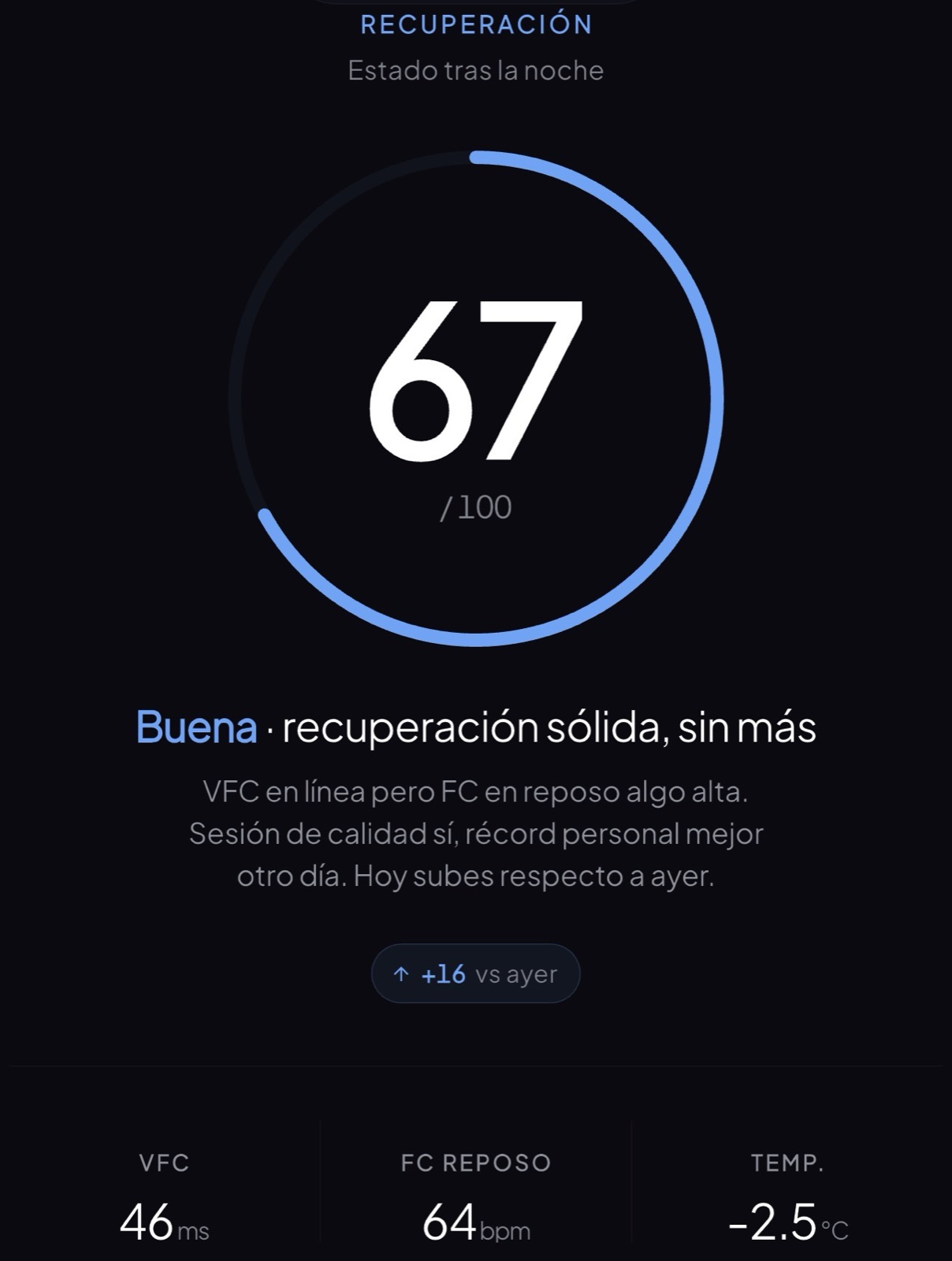
The composite recovery score
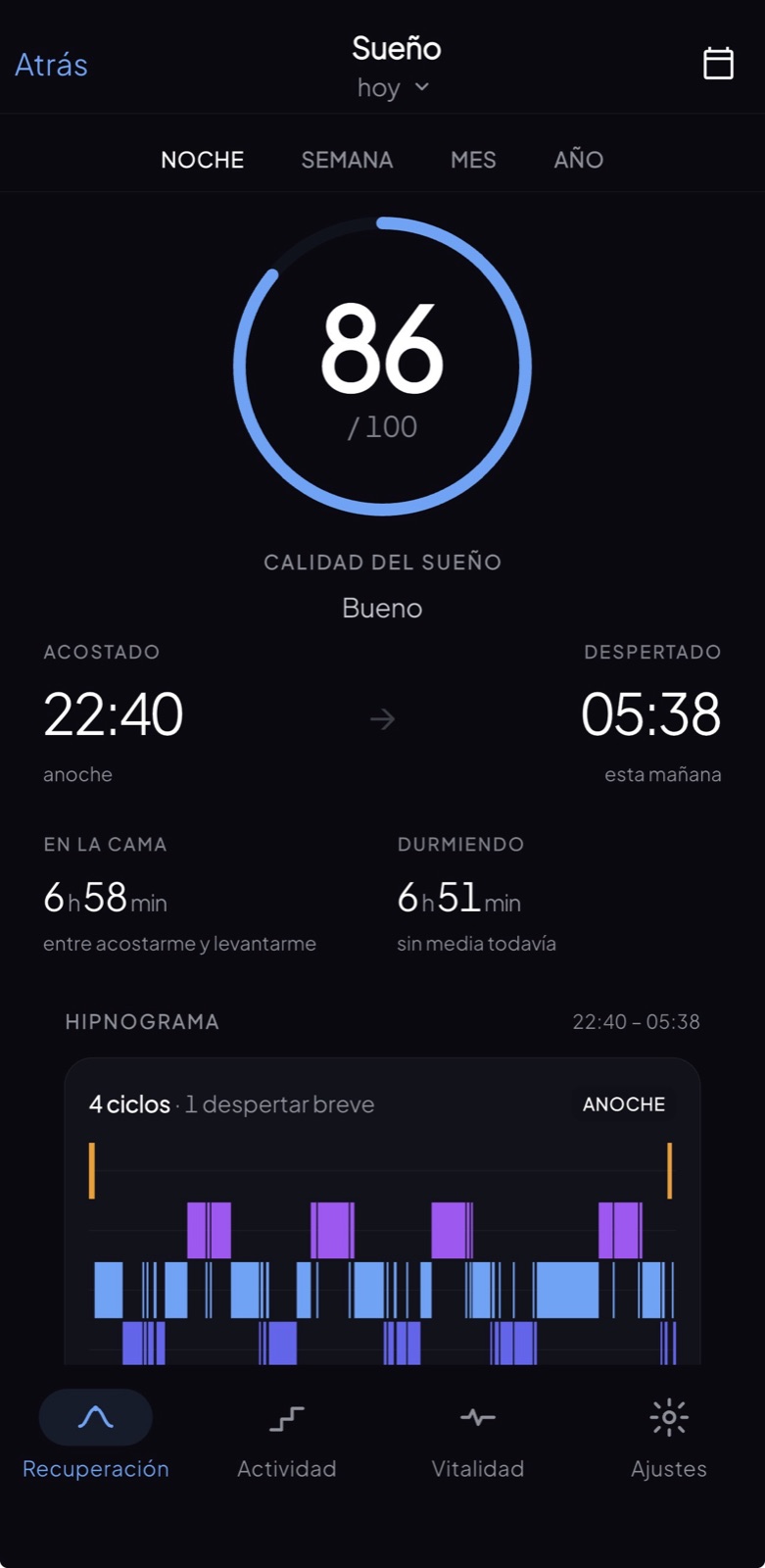
Sleep, scored against a personal baseline
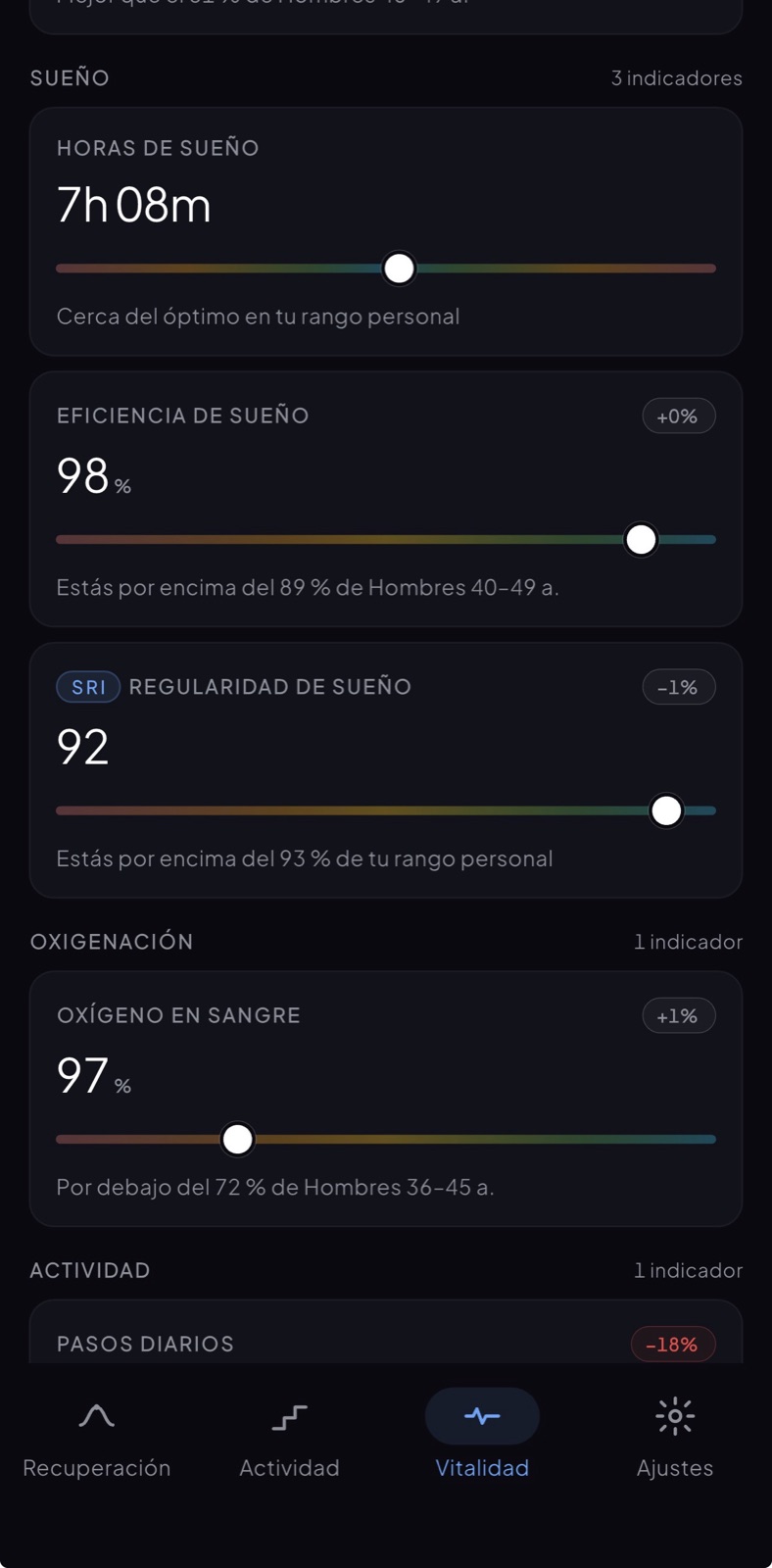
Metrics benchmarked to personal and population baselines
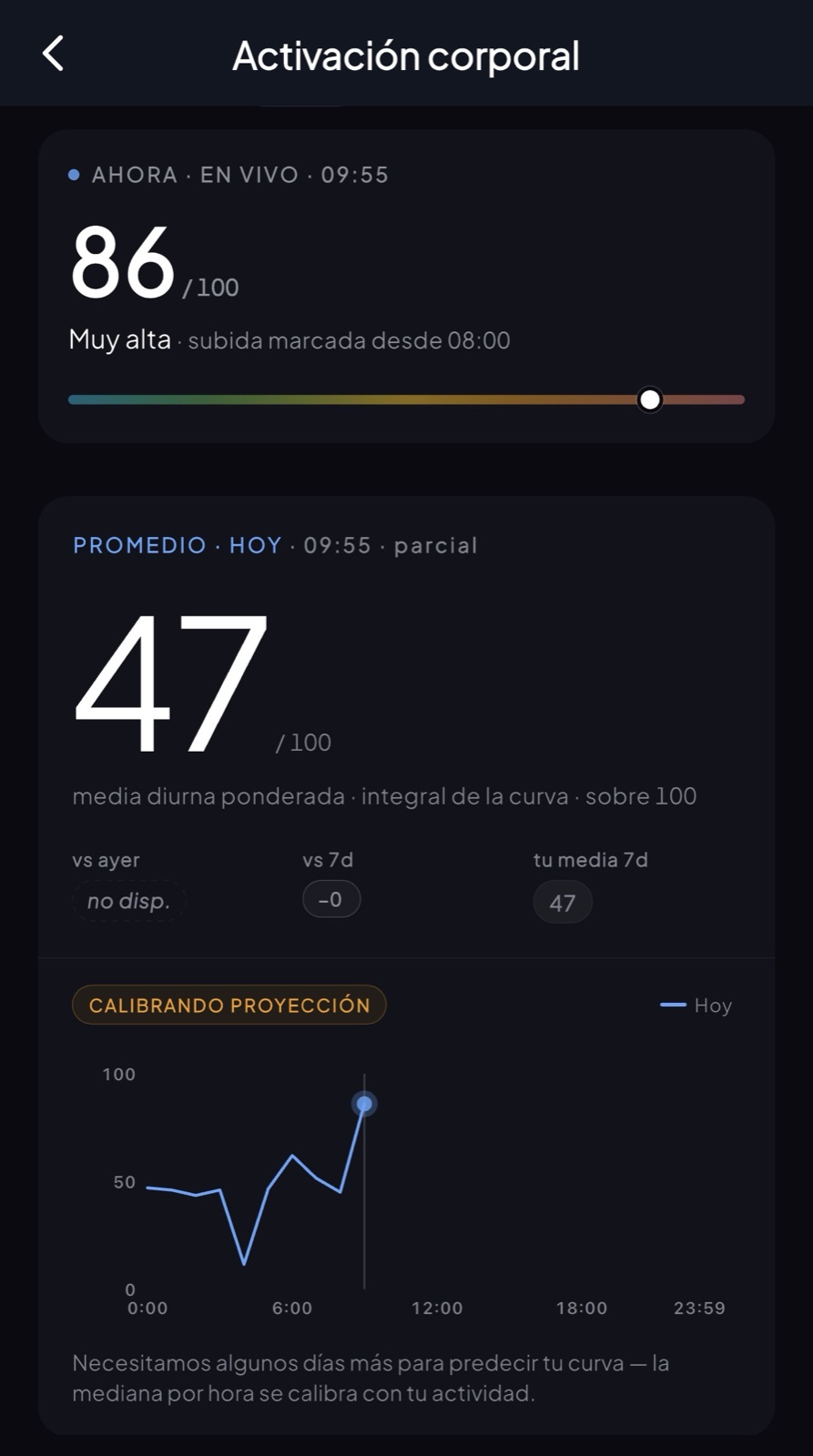
One metric in detail: live value, daily average, the day's history
The team that comes after
The mandate included replacing myself. I designed the hiring process from zero (job descriptions, screening, interview loops) and hired the best team I could find to carry the objective from here: the first production engineer and the full-time CTO who succeeds me. I held the technical gate on that selection with the founders: interviewing candidates, weighing them against the platform and the roadmap, and casting the deciding vote on where the bar sits. The team plan through year one gates each hire on a concrete milestone, so headcount tracks validation.
Signature Decisions
Three calls I'd defend in any post-mortem.
Architect for the ecosystem before the first device ships.
The founders' vision was always more than one device, and the call was to pay for that future up front: the lead device ships now, and every wearable added later drops into the existing engine with no rebuild. The most important technical bet I made, and the foundation for where the company's defensibility ends up living.
Build the science layer in-house.
The temptation in consumer health-tech is to license a third-party wellness scoring engine. I argued for proprietary metrics built on more than 100 papers of evidence, with the discipline to retract metrics when the evidence does not support them. That credibility gets the product a hearing with the people a health claim has to survive: a skeptical clinician, a cautious distribution partner, a user who has been burned by wellness scores before.
The long-term moat is something else: an AI agent that feeds on the user's own data across every device in the ecosystem and delivers a hyper-personalized experience back. Hardware is a commodity. Science gets you in the room. The agent fed by the user's own data is what keeps you defensible.
Engineer for handoff from day one.
Quality and architecture choices that looked like overkill on a five-month MVP were really a bet that the company would need to scale past me. The proof arrived on schedule: the CTO I hired inherits a platform they can extend in week one, not a codebase that needs a quarter of cleanup before any new work starts.
Hardware is a commodity. Science gets you in the room. The agent fed by the user's own data is the moat.
The Handoff
What Wellbeinn has on the day I hand over:
- The app live on iOS and Android, in pre-release with 40+ active users and moving toward general availability.
- A production-grade codebase: 1,300+ merged pull requests, 12,000 automated tests at 84% coverage, a layered architecture and a data model designed for the devices that come next.
- 2,000 pages of documentation, technical and scientific, so nothing lives only in my head.
- A full-time CTO, hired with my deciding technical vote, starting from a working codebase.
- A first production engineer, a hiring process, and a gated team plan through year one.
- A 17-metric science rail the next waves keep extending, and the AI roadmap that follows it.
The last thing I built was my own replacement. That was the brief.
I have done the CTO job and I have been the founder and CEO, so I make the product and technology call as one decision, not two. Wellbeinn is what that looks like in five months.